Published
Quick answer
The Buddhist teaching on forgiveness of others is about releasing resentment for your own peace, not about declaring the harm acceptable or forcing instant reconciliation.
Key takeaways
- Forgiveness releases your own resentment; it does not excuse or forget the harm
- Holding a grudge keeps the mind replaying the hurt, which disturbs sleep
- Forgiveness is a gradual practice, not one declaration you make once
- You can forgive someone without reconciling with them or trusting them again
- Loving-kindness (metta) toward a difficult person is a direct forgiveness practice
The Buddhist teaching on forgiveness of others asks you to put down a grudge for your own relief, not to declare that what happened was acceptable. It treats resentment as a weight you keep carrying long after the other person has moved on, and forgiveness as the act of finally setting it down.
What does Buddhist teaching on forgiveness of others actually ask of you?
It does not ask you to decide the harm was fine, to forget it happened, or to immediately feel warmly toward the person again. Those are separate matters. Forgiveness here is narrower and more practical: it is choosing to stop feeding the resentment that keeps replaying the hurt in your own mind, long after the original event is over.
See also: Buddhist Teaching on the Nature of Thoughts Explained.
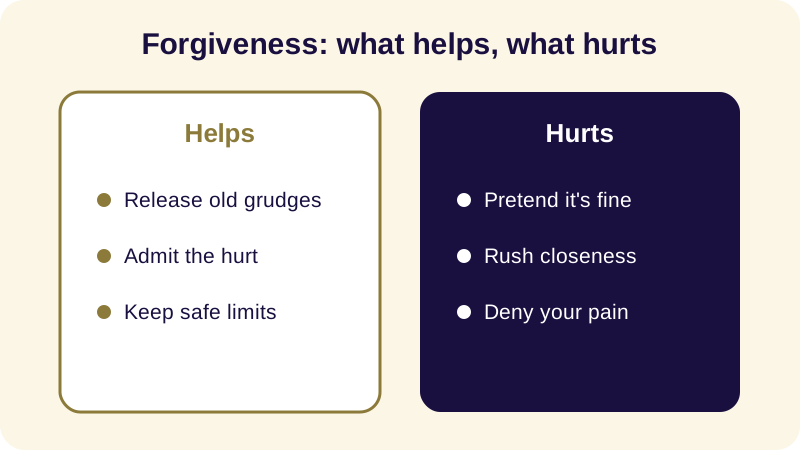
This is close to the Middle Way at work: neither suppressing the hurt as if it were nothing, nor nursing it indefinitely as if replaying it will somehow settle the score. Both extremes keep you tied to the person who harmed you. Forgiveness is the quieter third option, where you acknowledge what happened clearly and then stop re-living it on purpose.
Why does holding onto resentment keep a mind awake at night?
Resentment behaves like unfinished business. The mind treats an old insult the way it treats an unsolved problem, returning to it uninvited, rehearsing what you should have said, bracing for a confrontation that already ended. None of this changes the past. It simply keeps the body in a mild state of alert, which is exactly the wrong condition for falling asleep.
One of the oldest statements of this idea opens the Dhammapada's first chapter: hatred is never settled by hatred, only by its absence. You can read the fuller passage and its background story in our piece on the Dhammapada's Twin Verses. The point is not sentimental. It is a description of how minds actually work — matching anger with more anger just adds fuel, while releasing the grudge is the only thing that actually ends it for you.
How do you actually practice forgiveness toward someone who hurt you?
Forgiveness rarely arrives as one clean decision. It is closer to a practice you return to, especially with hurts that run deep. A simple sequence many people use follows roughly four moves.
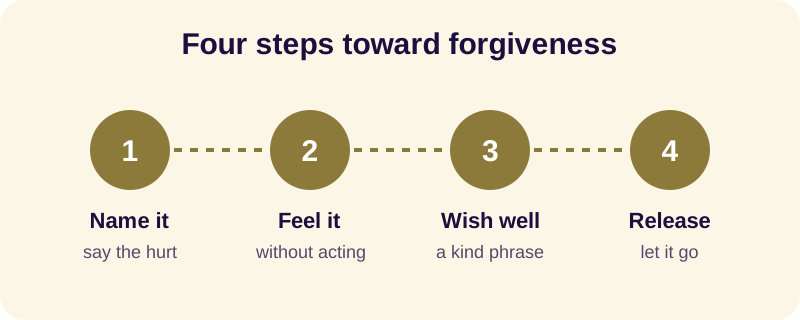
The third step — wishing the person well — is the one people resist most, because it can feel like letting them win. It is not an endorsement of what they did. It is metta, loving-kindness, extended even to someone you are still hurt by, on the understanding that carrying ill will toward them costs you more than it costs them. The four brahmaviharas — loving-kindness, compassion, joy and equanimity — describe this stance toward all beings, difficult ones included. If the idea of sending kindness to someone who wronged you feels too large right now, our guide to metta meditation walks through smaller, more workable phrases to start with.
Does forgiving someone mean excusing them or going back to how things were?
No. Forgiveness and reconciliation are two different things. You can release your own resentment toward someone and still keep firm boundaries, decline further contact, or choose never to trust them with the same thing again. The grudge is yours to set down; the decision about future closeness is a separate, practical judgment that still belongs to you.
This distinction matters because people sometimes avoid forgiveness entirely, worried it means handing back their safety. It doesn't. Releasing resentment is closer to the practice of non-attachment — loosening your grip on the story of the wrong, not loosening your grip on sensible caution. You can let go of the anger while keeping every bit of the wisdom you gained about where the boundary needs to be.
What can you do tonight when forgiveness still feels far away?
Start smaller than a full decision to forgive. Lying down, notice the specific thought that keeps surfacing, and instead of arguing with it, simply say inwardly: "I am carrying this, and I am allowed to set it down for tonight." You are not promising permanent forgiveness, only a few hours of rest from rehearsing the story. The opening twin verses of the Dhammapada make a similar point: whichever thought you keep feeding — resentment or ease — tends to grow stronger, and bedtime is simply a bad time to keep feeding the angry one. A related tale on handling anger itself is told in our piece on a Buddhist story about anger management.
If what you're carrying tonight is less about one person and more a general restlessness, it can help to widen the practice: slow breathing, a body scan, or simply a quiet, narrated story to follow instead of your own thoughts. The app offers narrated Jataka tales, episodes from the life of the Buddha and Dhammapada verses alongside guided loving-kindness meditation, with a sleep timer that stops the audio so you don't have to remember to turn anything off. None of this is a cure for a serious grievance or ongoing distress — those deserve a conversation with a doctor or counselor — but for the ordinary nightly replay of an old hurt, giving the mind somewhere calmer to rest is often enough to let the grudge loosen its grip for the night.
Frequently Asked Questions
What is the Buddhist teaching on forgiveness of others?
It teaches that forgiveness is releasing the resentment you carry toward someone who harmed you, for your own relief, rather than declaring the harm acceptable. The emphasis falls on freeing your own mind from a grudge, since the anger mainly burns the person holding it.
Does Buddhist forgiveness mean I have to trust the person again?
No. Forgiveness and trust are separate. You can release resentment toward someone while still keeping distance, setting boundaries, or declining to reconcile. Letting go of the grudge does not obligate you to restore the relationship to what it was before.
Is forgiveness in Buddhism something you do once?
Usually not. Most people forgive the same hurt many times as the memory resurfaces, especially at night. Each time it returns, you can simply set it down again rather than treating one relapse as proof you failed.
What if I can't forgive someone yet?
That's common, and the teaching doesn't ask for a sudden decision. You can start smaller: naming the hurt honestly, wishing the person freedom from suffering through a loving-kindness phrase, and letting full forgiveness arrive gradually rather than forcing it before you're ready.
Can forgiveness help me sleep better at night?
Releasing a grudge can quiet the replaying thoughts that keep a mind alert at night, but persistent sleep problems or ongoing distress from a serious harm are worth bringing to a doctor or counselor rather than relying on a practice alone.
