Published
Quick answer
The simplest way to learn how to start a daily meditation habit is to sit for a few minutes at the same time each day, anchor attention to the breath, and lengthen the sit slowly once it feels automatic.
Key takeaways
- Start with a sitting so short that skipping it takes more effort than doing it
- Attach the sitting to something you already do daily, like waking or brushing your teeth
- Use the breath or body as an anchor; notice wandering and return without judgment
- Keep the first weeks about consistency, not duration — length can grow later
- A missed day doesn't break the habit; only treating it as failure does
Learning how to start a daily meditation habit comes down to one principle: make the very first sitting so short that skipping it takes more effort than doing it. Everything else — the cushion, the time of day, the technique — is secondary to that first small commitment.
What's the simplest way to start a daily meditation habit?
Most attempts at a daily meditation practice fail not because the technique is wrong, but because the first session is too ambitious. The Buddhist tradition treats practice as something built step by step rather than willed into existence all at once, and that pattern offers a workable meditation routine for beginners that doesn't depend on willpower alone.
See also: Buddhist Blogs: What to Read and Where to Start.
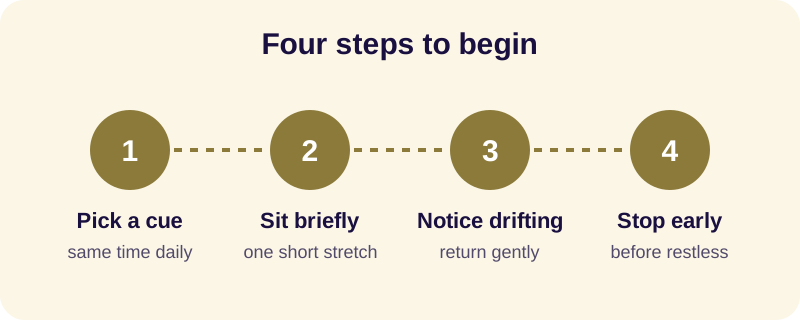
- Pick a fixed cue, such as right after brushing your teeth or right before bed, so the sitting attaches to something you already do every day and doesn't depend on remembering a separate task.
- Sit for a short, genuinely doable stretch. At the start the goal is showing up, not lasting a particular length of time, and a sitting you can finish easily is more valuable than one you dread.
- Use the breath or the body as an anchor for attention. When the mind wanders, Buddhist instruction is simply to notice it and return, without scolding yourself for having wandered at all.
- Stop while it still feels easy. Ending before restlessness sets in makes tomorrow's sitting easier to begin, because the mind remembers the sitting as calm rather than as a struggle.
- Note that you sat, even just in your head. A visible streak, however modest, becomes its own quiet encouragement to continue on the days motivation is thin.
None of these steps require a particular chair, app or robe. A seat you can hold without fidgeting, a quiet-enough room and a few unclaimed minutes are the entire list of requirements. The posture can be a chair with feet flat on the floor and the back reasonably upright; cross-legged seating on a cushion is a traditional option, not a rule.
How long should each sitting be?
There's no required length for a new meditation routine. The point early on is to make the sitting short enough that avoiding it would take more willpower than doing it, then let the length grow naturally once the habit is established, not the other way around.
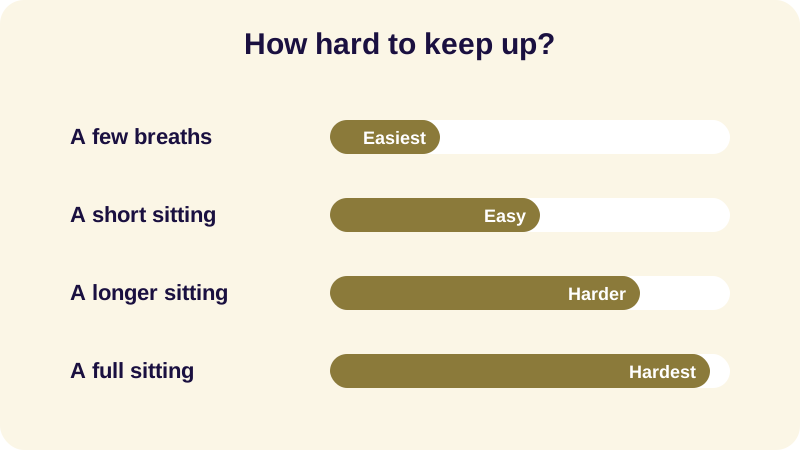
In practice, many people find that a handful of quiet minutes, repeated daily, does more for the mind over a year than an occasional long session ever could. If a sitting starts to feel natural, let it grow there on its own — adding a little length only once the shorter version feels effortless. The daily habit matters more than how long any single sitting runs, and a habit that survives a busy week is worth more than a single impressive session that never repeats.
What time of day works best?
Morning sittings tend to be steadier because the day hasn't yet filled with obligations, while evening sittings double as a way to settle a racing mind at night before sleep. Neither is more correct than the other; the Buddhist emphasis on the Middle Way suggests choosing whichever time you can actually keep, rather than the one that sounds most disciplined.
If you already use the evening to wind down, folding a short sit into mindfulness for sleep practices, such as a slow body scan, can attach the new habit to a routine you're already building rather than asking you to find an extra slot in the day. Some people split the difference and keep a brief sitting at both ends of the day — a few minutes on waking to set a steady tone, and a longer unwind in the evening, without worrying that one has to replace the other.
What should I do when I miss a day?
Missing one day does not undo a daily meditation habit; treating the miss as proof the whole project has failed does. The practical response is to sit again at the next chance you get, without the detour through guilt, disappointment, or a renewed and overly strict plan meant to make up for it.
This is also where the Buddhist framing of practice as training, rather than achievement, helps. A single missed sitting is not a broken vow; it's simply the next opportunity to begin again, the same way a lapse in the Five Precepts is met with renewal rather than punishment. The habit is not a streak you protect at all costs — it's a relationship with a daily routine that can absorb an interruption and keep going.
How can Buddhist teaching support the habit itself?
A daily sitting doesn't have to stay plain breath-watching forever. Once a short sit is established, it becomes a container for other practices: a few minutes of loving-kindness meditation, a slow body scan, or simply resting attention on sound. The four brahmaviharas — loving-kindness, compassion, joy and equanimity — give the sitting a direction beyond just staying still, and a reason to keep returning to the cushion that isn't only self-discipline.
Short Buddhist teachings can also give a sitting something to settle around on nights when the mind is particularly loud. A single line held gently in mind for a few minutes works the same way an anchor at the breath does: it gives the attention a place to return to, rather than leaving it to wander wherever the day's worries lead.
The Buddha Story app can sit inside this same small habit rather than replace it. Its Guided Meditation section offers short sessions for loving-kindness, body scan and breath awareness, paired with a sleep timer that stops the session for you if the sitting turns into rest at the end of the day. None of this is a substitute for the plain, patient act of sitting down — it's simply a way to make that act easier to repeat tomorrow, especially on the evenings when sitting in total silence feels harder than usual.
If you came looking for a single way to build a meditation habit that lasts, this is the closest thing to one: pick a length so small you'd feel silly skipping it, sit at the same point in your day, and let the habit outlast your motivation rather than depend on it.
Frequently Asked Questions
How long does it take to form a daily meditation habit?
There's no fixed timeline. For most people the habit feels steady once it has survived a few ordinary weeks, including some rough days, without becoming a source of guilt. Consistency at a small size matters far more than hitting any particular number of days.
What's the best time of day to meditate?
Whichever time you'll actually keep. Mornings tend to be steadier because the day hasn't filled up yet, while evenings double as a way to settle a busy mind before sleep. Pick the slot you can protect, not the one that sounds most disciplined.
Do I need a cushion or a particular posture to start?
No. A chair with your feet flat on the floor and your back reasonably upright works fine. The posture only needs to be stable enough that you're not distracted by discomfort or sleepiness; the cushion and the cross-legged seat are optional extras, not requirements.
What if I fall asleep during an evening sitting?
For an evening sit that's not a failure, since settling into rest is often the point at that hour. If daytime sittings also put you to sleep, try sitting earlier or with eyes gently open. Ongoing, unwanted sleepiness that affects your day is worth mentioning to a doctor.
Should I meditate alone or use guided audio?
Either works. Guided sessions can help in the first weeks by giving the mind something to follow, while sitting in silence builds a more independent practice over time. Many people start guided and gradually need the voice less as the habit settles in.